.png)
Whangārei, Kaipara and Far North district councils have agreed in principle to establish a Northland-wide council-controlled organisation (CCO) to deliver drinking water and wastewater services from July 2027.
'Northland Waters, Ngā Wai o e Tai Tokerau' will be a specialist, region-wide water services provider, delivering these services on behalf of all three councils, subject to final decisions in the first half of 2026.
It will bring together expertise, scale and investment capability to deliver safe, reliable and resilient water services, while remaining responsive to local community needs.
• Find out about the advantages of Northland Waters for Te Tai Tokerau, how it came to be, and its plan for establishment below, or visit the Northland Waters website: northlandwaters.co.nz
Advantages for Northland
Northland Waters will provide Northland with advantages, including:
- Improved customer outcomes through more consistent, transparent and region-wide service practices
- Better value through improved operational efficiency, reduced duplication and leveraging regional scale
- Improved price certainty through consistent regional planning and financial management
- Enhanced compliance performance by building region-wide capability to meet increasing regulatory requirements
- Acceleration of future growth by unlocking greater borrowing capacity
- Retention of local ownership while enabling a dedicated regional entity to operate more independently and effectively
- Reduced water wastage through consistent, region-wide approaches to monitoring and network management
- Establishment of clear, consistent performance targets and reporting expectations, improving transparency and accountability
- Greater transformation and innovation through coordinated procurement, modern data management and improved delivery approaches
- Co-ordinated region-wide planning and investment to water services delivery, aligned with catchment needs and shared regional priorities
- Standardised data, systems and compliance processes to deliver clearer reporting and more reliable decision-making
- Strengthened workforce capability by combining expertise, resources and career pathways across the region
- Freeing up councils to focus on wider community priorities by shifting water service delivery to a specialised provider.
Northland Waters background
This change is coming as a result of the Local Water Done Well reforms, which aim to address New Zealand’s long-standing drinking, wastewater and stormwater challenges.
The New Zealand Government’s framework is designed to enable councils to deliver water services in a way that is financially sustainable, compliant with regulatory standards and responsive to local community needs.
It provides flexibility for councils to collaborate regionally to achieve the scale and capability required for effective service delivery, while maintaining local ownership.
Under this framework, councils needed to develop water services plans that demonstrate their ability to meet these requirements, encouraging them to work with neighbouring districts on solutions that could benefit larger regions.
For more information about Local Water Done Well, visit the Department of Internal Affairs website.
Water Services Policy and Legislation (dia.govt.nz)
Water service delivery options considered
The Government provided several options for how water could be delivered in future. In Northland, district councils considered the following options for service delivery:
- an in-house business unit (our current delivery model)
- a council-controlled organisation (CCO) owned by multiple councils.
Each council undertook consultation, proposed two to three variations of the options above and explaining how they would affect rates, debt and levels of service. In Whangārei and Far North sentiment was weighted in favour of an in-house business unit, while Kaipara preferred a Northland multi council-controlled organisation overall.
Community feedback and collaborative decision-making
Following community consultation, Northland's district councils formed a cross-council elected members steering group to explore collaboration options.
The group included the mayor and two elected members from each council and was reformed as the Elected Members Steering Group in December 2025 following local government elections. It is supported by council staff, the Department of Internal Affairs (DIA), and an independent adviser.
After evaluating the proposed options and community feedback from all districts, the group concluded that creating a Northland council-controlled organisation (CCO) would be the best way forward for the region.
Key plans and agreements
A joint Water Services Delivery Plan was adopted by all three of Northland’s district councils in August 2025 and accepted by the Department of Internal Affairs (DIA) in early October 2025.
Water Services Delivery Plan (pdf, 125mb) (large file)
In September, chief executives of each council signed a commitment agreement for the councils to work together to establish the council-controlled organisation (CCO).
Water Services Commitment Agreement (pdf, 2mb)
For more information about Local Water Done Well, visit the Department of Internal Affairs website:
Water Services Policy and Legislation (dia.govt.nz)
In March and April 2026, councils from each participating district re-committed to forming the CCO with an 'in principle' decision to proceed with establishment.
At these meetings, council considered the draft legal documents to establish the company and commit in principle to its incorporation.
Establishing Northland Waters
Northland Waters will be established in accordance with its water service delivery plan, aiming to have everything in place for a smooth transition into service delivery by July 2027.
Establishment focuses on preparing the organisation to deliver water services that reflect the needs and expectations of Northland communities, while developing the foundations for responsible investment and long‑term financial sustainability.
As part of its establishment, Northland Waters is being set up as a single, integrated regional entity, with the people, systems, processes and relationships in place to support consistent, efficient and equitable service delivery.
This includes preparing for safe, compliant operations and a resilient water network that can support Northland’s future growth and development.
Establishment phases
The establishment timeline for the new water services entity is structured in three phases, with gradual transition periods between each stage.
Leadership and establishment team
Northland Waters appointed Kate Simmonds as its Chief Executive in August 2026 and she will commence this role from 5 October 2026.
Kate is a highly respected water sector leader with extensive experience leading large-scale operations, infrastructure programmes and multidisciplinary teams in complex, publicly accountable environments.
Born and raised in Northland and now based in Kerikeri, Kate combines extensive international experience with a strong connection to the region she will serve.
Elected members governance
Collaboration between Northland’s district councils for Local Water Done Well began in early 2025 with the establishment of a cross‑council working group of elected members to consider options for working together across councils.
The group included the mayor and two elected members from each council and was reformed as the Elected Members Steering Group in December 2025 following local government elections. It is supported by council staff, the Department of Internal Affairs (DIA), and an independent adviser.
The Elected Members Steering Group guides the establishment of the council-controlled organisation (CCO) and considers the opportunities and impacts the changes may have on their respective districts.
Upon the organisation’s incorporation in May 2026, a Shareholder Representatives Group will be established to provide oversight of Northland Waters’ establishment, go-live and beyond.
Elected members of the steering group include:
- Whangārei Mayor Ken Couper (Chair)
- Far North Mayor Moko Tepania
- Kaipara Mayor Jonathan Larsen
- Far North District Councillor Ann Court
- Far North District Councillor John Vujcich
- Whangārei District Councillor Deb Harding
- Whangārei District Councillor Paul Yovich
- Kaipara District Councillor Craig Jepson
- Kaipara District Councillor Rachael Williams.
Establishment and transition phase - May 2026 to July 2027
This phase aims to set up the water organisation so that it is fully prepared to assume service delivery and responsibilities by July 2027.
During this phase, transitional and operational activities required to establish a standalone business begin.
This includes development of a water services strategy, transfer agreements, budget, policies and procedures for asset management, capital delivery, systems and technology, operations, funding, financing, governance, legal and risk management.
Councils also prepare to continue the delivery of non-water services.
Go live and operational phase - commences July 2027
This phase aims to commence the delivery of water services under Northland Waters from 1 July 2027.
It marks the full transition of service delivery responsibilities to the newly established council-controlled organisation (CCO) as an independent entity with its own governance and operational teams.While some transition activities may still be required, the structure will take a form that supports business as usual operation.
Governance and leadership
The establishment of Northland Waters is being guided by a coordinated governance and leadership framework to support effective oversight, decision‑making and a successful transition into service delivery.
This includes leadership from elected members, independent advisers and an experienced establishment team working together to ensure the organisation is well prepared for incorporation and ongoing operations.
Scoping and preparation phase - September 2025 to May 2026
This phase focuses on establishing the governance and operational foundation needed for the successful implementation of the council-controlled organisation (CCO) .
During this phase, several key foundation documents are developed, including a shareholder’s agreement and constitution, before the organisation is incorporated as its own legal entity in May 2026.
An establishment plan for Phase 2 is also developed during this phase, setting out the approach for standing up Northland Waters.
Strong governance and leadership are appointed during this phase to undertake detailed planning in phase 2 and enable the successful implementation of Northland Waters.
Interim advisory and the Northland Waters board
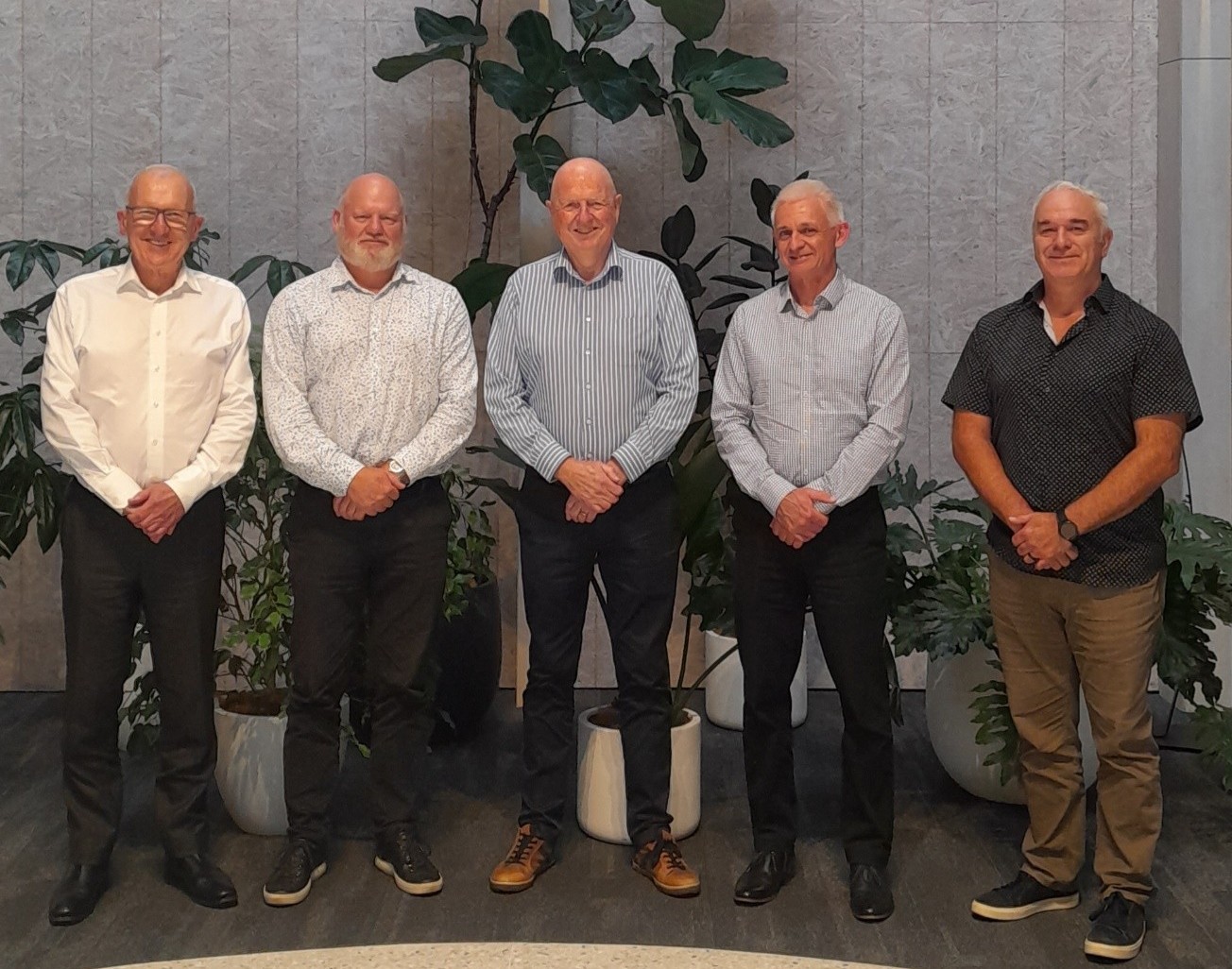
In December 2025, a highly qualified team of five was appointed to provide independent assurance and professional advice to elected members and implementation teams for the establishment of the council-controlled organisation (CCO).
The Establishment Advisory Group serves an interim advisory until the CCO becomes incorporated, after which it will become the first board of Northland Waters.
Together, the members bring a wealth of experience in leadership, governance, water infrastructure, law and finance, along with comprehensive knowledge of local government.
The Establishment Advisory Group members include:
- David Rankin – Former Chief Executive at Eke Panuku Development Auckland and Chief Executive at Auckland City Council.
- Steve Couper – Chief Digital Officer, Asia Pacific, New Zealand and Australia at Mott MacDonald, former President and board member at Water New Zealand, and fellow of Engineering New Zealand.
- Murray Bain – Chair at Electra Ltd, member of Water Services Delivery Plans Review Panel for the Department of Internal Affairs (DIA), former Chair for the Northland and Auckland Water Services Entity Establishment Board.
- Michael Sage – Specialist water and infrastructure lawyer, Chair of New Plymouth District Council’s Water Services CCO, member of Gisborne District Council’s Water Services Committee, former Simpson Grierson Partner advising Watercare, Metrowater, Manukau Water and councils nationwide.
- Marlon Bridge – Chief Technical Adviser on Government’s Local Water Done Well reforms, former Deputy Chief Executive at Watercare and Chief Financial Officer at Manukau Water Ltd, and Chief Financial Officer at Watercare.
News
- Northland Waters incorporated as establishment confirmed (22 May 2026)
- Council approves establishment on Northland Waters (28 April 2026)
- Councils commit in principle to establishing regional water services organisation (7 April 2026)
- Northland makes strong headway (20 March 2026)
- Interim advisory in place for Northland water CCO establishment (19 January 2026)
- Northland elected members form governance group for water CCO establishment (5 December 2025)
- Establishment of new Northland water organisation underway (7 October)
- Northland's district councils adopt Water Services Delivery Plan (28 August)
- Northland to establish new cross-council water organisation (31 July)
- Northland councils explore opportunities for water services delivery (11 June)
- Council backs joint approach for water services (29 May)
- Council prepares to consult on future water service delivery (27 March)
Frequently Asked Questions
How will shares in the CCO be divided?
Councils have agreed in principle to an equal shareholding arrangement, whereby shares are divided equally between each participating council.
How will Northland Waters be accountable to the community?
The Northland Waters Board is accountable to the region’s district councils through a Shareholders’ Representative Group of elected members who represent the interests of their communities. The Shareholders’ Representative Group will issue Northland Waters with a Statement of Expectations every three years, which sets out the Shareholders’ expectations of the water organisation, and informs and guides its decisions and actions. Northland Waters will use this to develop its Water Services Strategy, which outlines its strategic, operational and financial plans and this will be published on its website. The Northland Waters Board will also hold meetings that are open to the public and will be notified on its website. Community members are welcome to schedule a time and present their views to the Board.
How is the regional CCO expected to work and will it be different for residents of each district?
The Northland Local Water Done Well Working Group has agreed to a model that recognises the different starting points of each council in terms of water assets, debt levels and infrastructure investment needs.
This would be achieved by keeping financials ring-fenced for each district and having non-harmonised water charges for up to three years. Non-harmonised means water charges are different for residents in each district.
The exact details of this model are still to be worked through. It is expected that during the first three years, the CCO would be able to identify and prioritise some of the critical issues each district is facing and then be in a position to review its approach to finances and water charges.
Will there be a ‘lead’ Council during establishment?
Following each council’s adoption of the joint water services delivery plan, a commitment agreement was signed by each council’s Chief Executive.
This agreement included that Whangarei District Council is to be the lead council whose responsibilities include:
- managing project expenditure and tracing against the project budget
- preparing agendas and scheduling governance meetings for the project
- preparing reporting for governance meetings for the project
- entering into agreements for the benefit of the project.
What is a CCO?
A CCO is a Council‑Controlled Organisation.
In New Zealand local government, a council‑controlled organisation is a company or other entity that is owned or controlled by one or more councils, but operates at arm’s length from them on a day‑to‑day basis.
In simple terms:
- The councils own it (and set expectations)
- A Board governs it
- Management runs operations independently
- It is accountable to councils through formal reporting, statements of intent, and shareholder oversight
What will change for customers once Northland Waters is operational?
For most customers, service levels will stay the same or improve, with continued reliable water and wastewater services. Over time, customers will benefit from a more coordinated regional approach and investment in infrastructure. From 1 July 2027, bills for water and wastewater charges will be issued by Northland Waters rather than being included in rates notices or the water invoices currently issued by councils.
What happens if local councils amalgamate?
Northland Waters will be following the amalgamation decision process and work with the working group for that topic to ensure continuity of operations.
What is Northland Waters?
Northland Waters is a new council-controlled organisation that will become responsible for delivering water and wastewater services currently managed by Northland’s three district councils from 1 July 2027.
What will happen with stormwater?
Stormwater assets will remain with their respective councils in terms of decision making and costs, however a shared service arrangement may be made with the council-controlled organisation (CCO) for operations.
This is because many critical parts of the system are shared across other council services too. For example, roads drain stormwater during heavy rain, and green spaces in parks and reserves are often designed to capture excess water where possible.
What will it cost to establish the two-waters Northland CCO?
The three district councils have agreed to a budget of $1.5m for the first phase of implementation (scoping and preparation) at a council meeting in August 2025.
A forecast of total establishment costs, based on the likely scope, timeframes and resource costs to deliver, is tentatively estimated at $8m to $15m. This consists of approximately $5m to $8m in establishment costs alongside $3m to $7m in IT costs (both implementation and licensing costs).
The final establishment budget would need to be refined based on stakeholder expectations.
Why is Northland Waters being established?
Northland Waters is Northland’s response to the Government’s Local Water Done Well reforms, which aim to address New Zealand’s long-standing drinking, wastewater and stormwater challenges. The reforms required district councils to demonstrate how they will meet environmental and quality standards and maintain affordability, whilst being financially sustainable. The reforms encouraged councils to work with neighbouring districts on solutions that could benefit larger regions. Following council consultations and community feedback, a cross-council elected members group concluded that creating a regionally focused service provider would be the best way forward for Northland. Water infrastructure requires long-term, sustained investment. Northland's three district councils recognised that a dedicated, regionally focused organisation, with its own board, management and accountability framework, would deliver better outcomes than continuing with separate council-run services. A single regional entity means shared expertise, more efficient investment and stronger borrowing capacity to fund the infrastructure upgrades our communities need.